
A yard that still looks alive in August
Drought-tolerant plantings, native grasses, gravel and stone for Kansas City properties. Lower water bills, less mowing, and beds that don't go brown the week the city asks everyone to cut back.
- Lower water use
- Licensed & insured
- 30 mi around Blue Springs
- Free estimates
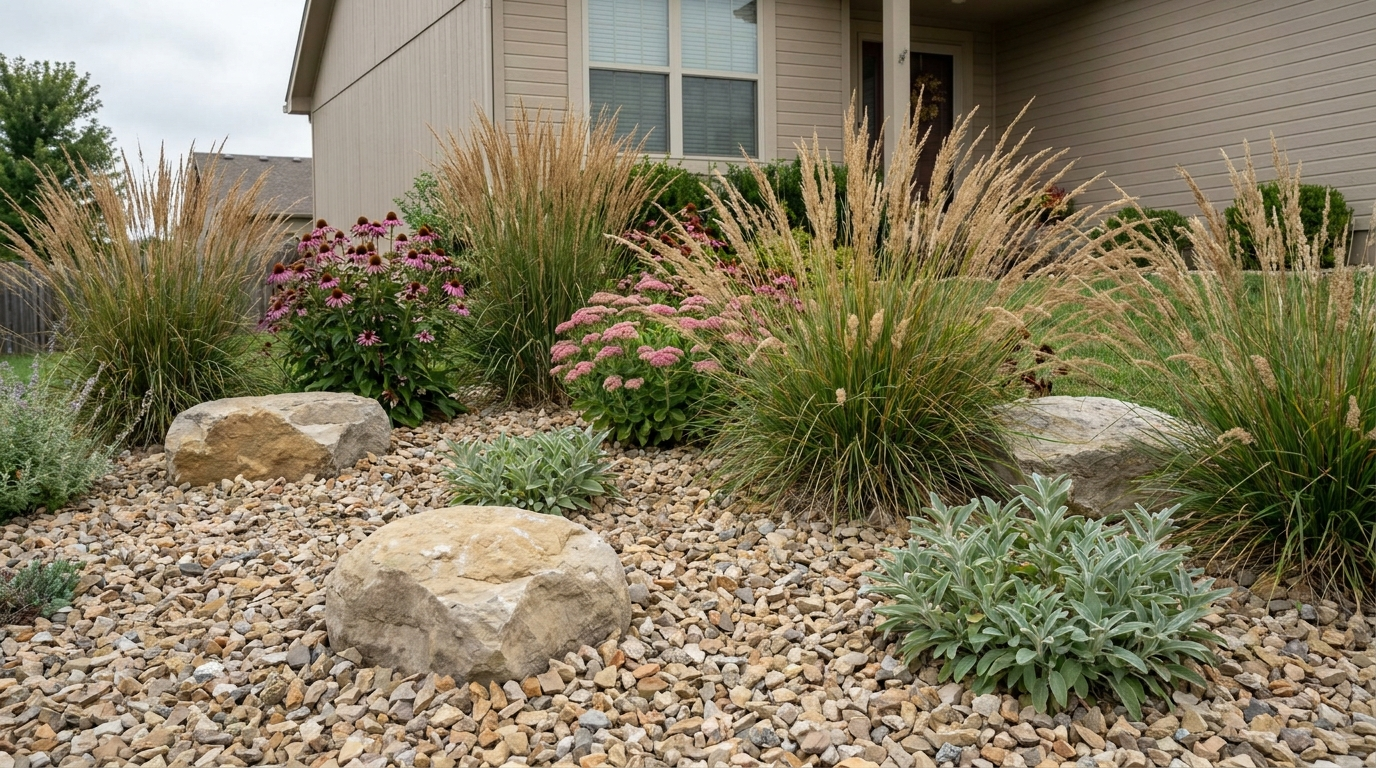
What a xeriscape install involves
Xeriscape isn't rock instead of plants. It's the right plants, placed so they need far less help getting through a Missouri summer.
-
Site and exposure assessment
Which beds bake and which stay shaded, where water already runs, and what your soil actually drains like. That decides everything downstream.
-
Drought-tolerant plant selection
Natives and adapted species chosen for the exposure each bed gets, grouped so plants with the same water needs share a zone.
-
Soil prep and grading
Compacted clay is the enemy of a low-water bed. We loosen and amend so roots go down instead of sideways, and shape the grade to hold rain where you want it.
-
Gravel, stone and hardscape accents
Decorative rock, boulders and permeable surfaces used with intent — as design elements, not as filler to cover bare dirt.
-
Mulch that actually holds moisture
Applied at the right depth over the planted areas so the soil stays cool and you're not watering to make up for evaporation.
-
Cleanup and a care sheet
Debris hauled off, plus written instructions for the establishment period — the one stretch when a xeriscape still needs regular water.
What xeriscape is, and what it isn't
“Xeriscape” gets used to mean two different things, and the difference matters a lot when you're the one paying for it.
It isn't a rock yard
Ripping out turf and covering the dirt in gravel is called zeroscaping, and it's not what we do. A gravel field radiates heat back at your house, kills soil biology underneath, and still grows weeds within two seasons — now with nothing shading them and rock to pull them out of. Real xeriscape is a planted landscape that happens to need very little supplemental water.
Grouping by water need does most of the work
The single biggest efficiency gain is putting plants with similar water needs together. If one thirsty shrub sits in the middle of a drought-tolerant bed, you end up watering the whole bed on its schedule and you've lost the benefit. We zone the planting so each area can be left alone or watered as a unit.
Soil prep is the unglamorous half
Most KC yards sit on heavy clay that's been compacted by construction equipment and years of mowing. Water hits it and runs off rather than soaking in. Loosening and amending that profile is what lets a plant put roots deep enough to find moisture on its own, which is the entire mechanism behind a low-water yard.
Native doesn't automatically mean no water
Missouri natives are adapted to this climate once established, but every plant needs regular water while it's growing roots — typically the first full season, sometimes two for woody plants. A xeriscape that gets abandoned in month one dies just as fast as anything else. The payoff comes after.
You'll still have some lawn, probably
Most people don't want zero turf, and they shouldn't. A smaller, well-placed lawn where you actually use it, with low-water plantings taking over the strips and slopes that were never pleasant to mow anyway, is usually the right answer. We're happy to convert part of a yard rather than all of it.
Included in a xeriscape install
- Site, soil and exposure assessment
- Water-zoned planting plan
- Soil loosening and amendment
- Native and drought-tolerant planting
- Decorative rock, gravel and boulders
- Mulch over planted areas
- Cleanup, haul-off and care instructions
Not included
- Drip irrigation system installation
- Landscape lighting
- Major regrading (quoted as drainage work)
- HOA or municipal permit applications
From turf to low-water
-
Walk the property
Jeremy looks at exposure, slope and soil, and asks which parts of the yard you actually use versus just mow.
-
Plan the zones
We map which areas convert and group plantings by water need, so each zone can be managed on its own schedule.
-
Written quote
Plant list, materials and price in writing. If converting part of the yard makes more sense than all of it, we'll say so here.
-
Install and establish
Turf removal, soil prep, planting, rock and mulch — then written watering instructions for the establishment stretch.
Thirsty turf to low-water planting
A Blue Springs side yard: struggling sod converted to native grasses and stone.
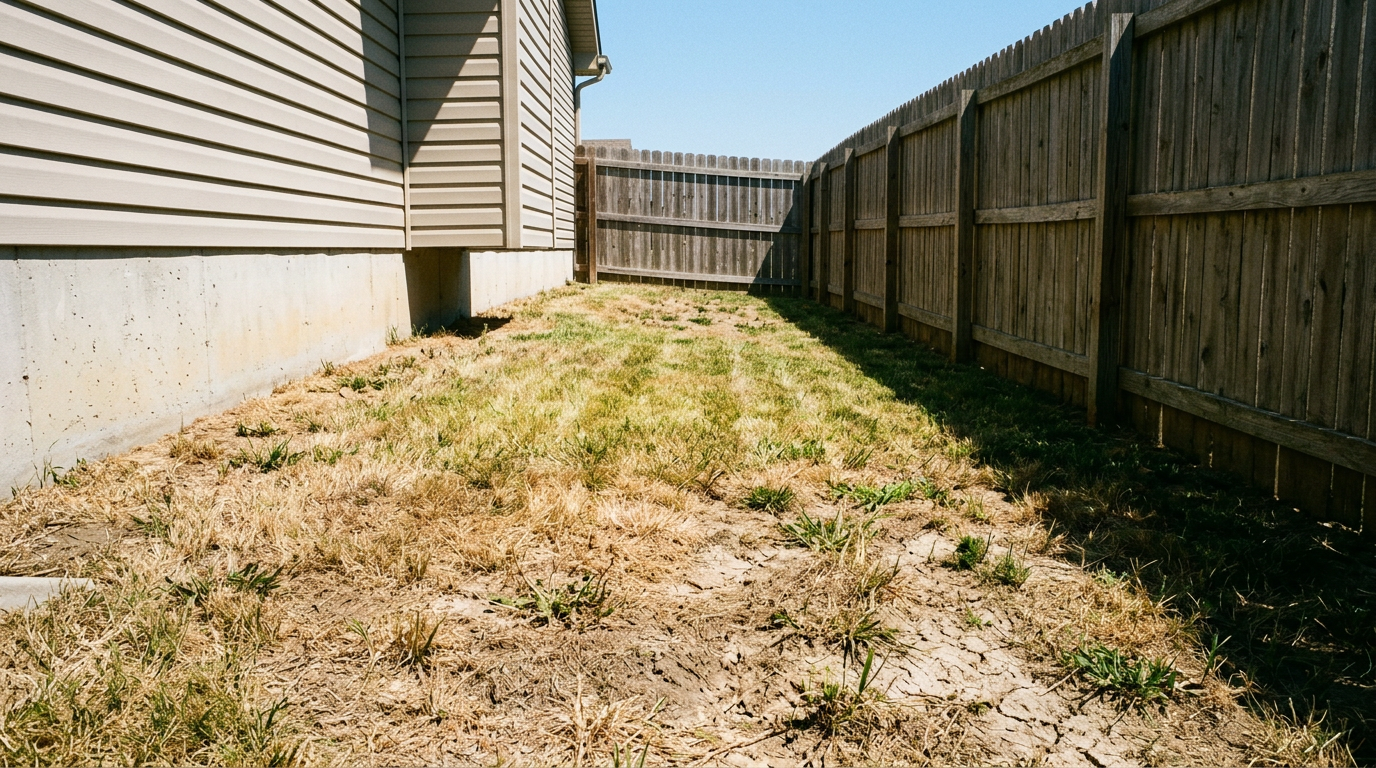
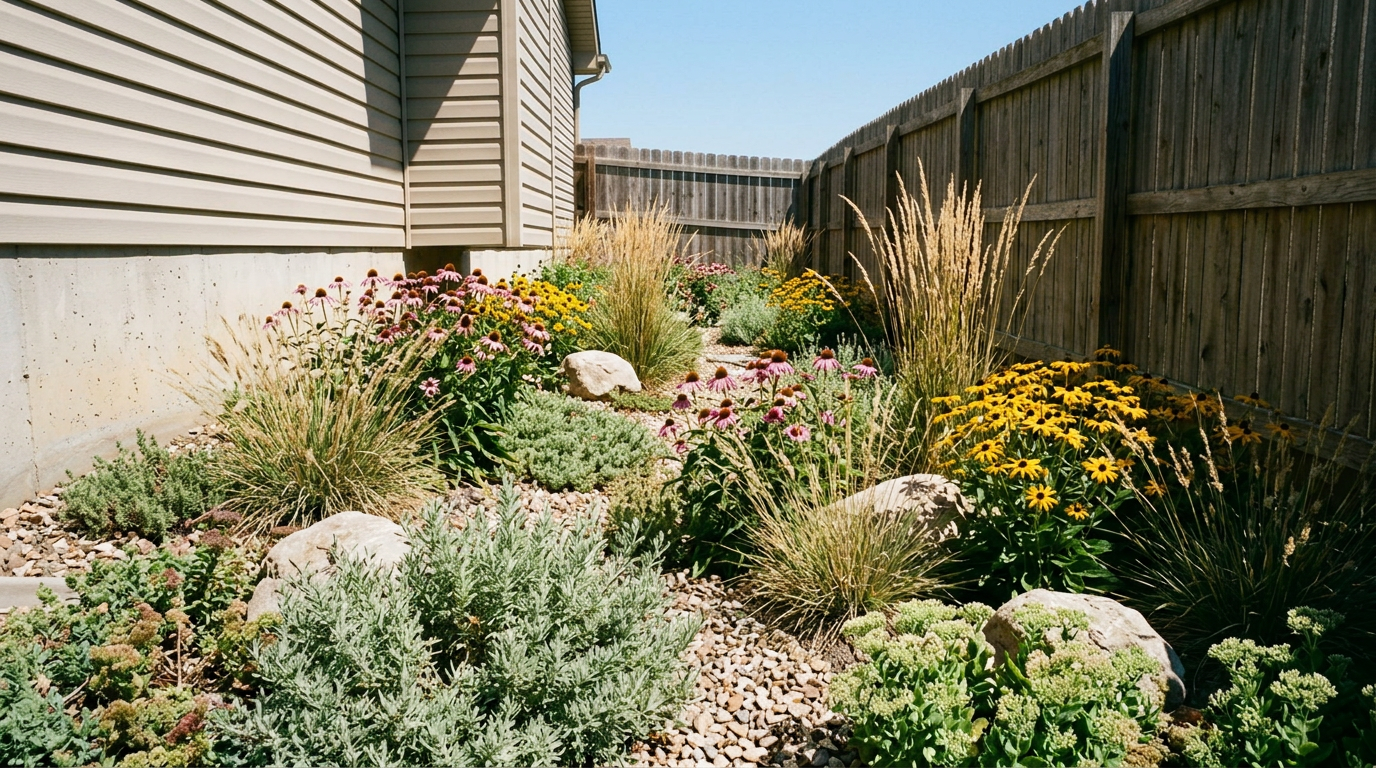
Drag the handle, or focus it and use the left and right arrow keys.
Xeriscape questions
Tired of watering a losing battle?
Jeremy will walk the property and tell you which parts are worth converting — and which are fine as they are.