
Lines set straight, posts set deep
New privacy, picket and rail fence, plus repairs on posts, panels and gates that have started to lean. Depth and setting are what keep a fence upright through Missouri frost — and they're invisible from the street.
- Install & repair
- Licensed & insured
- Mon–Sat, 6AM–6PM
- Free estimates
What we handle
New runs and repairs both. A leaning section usually doesn't mean the whole fence needs replacing.
-
New fence installation
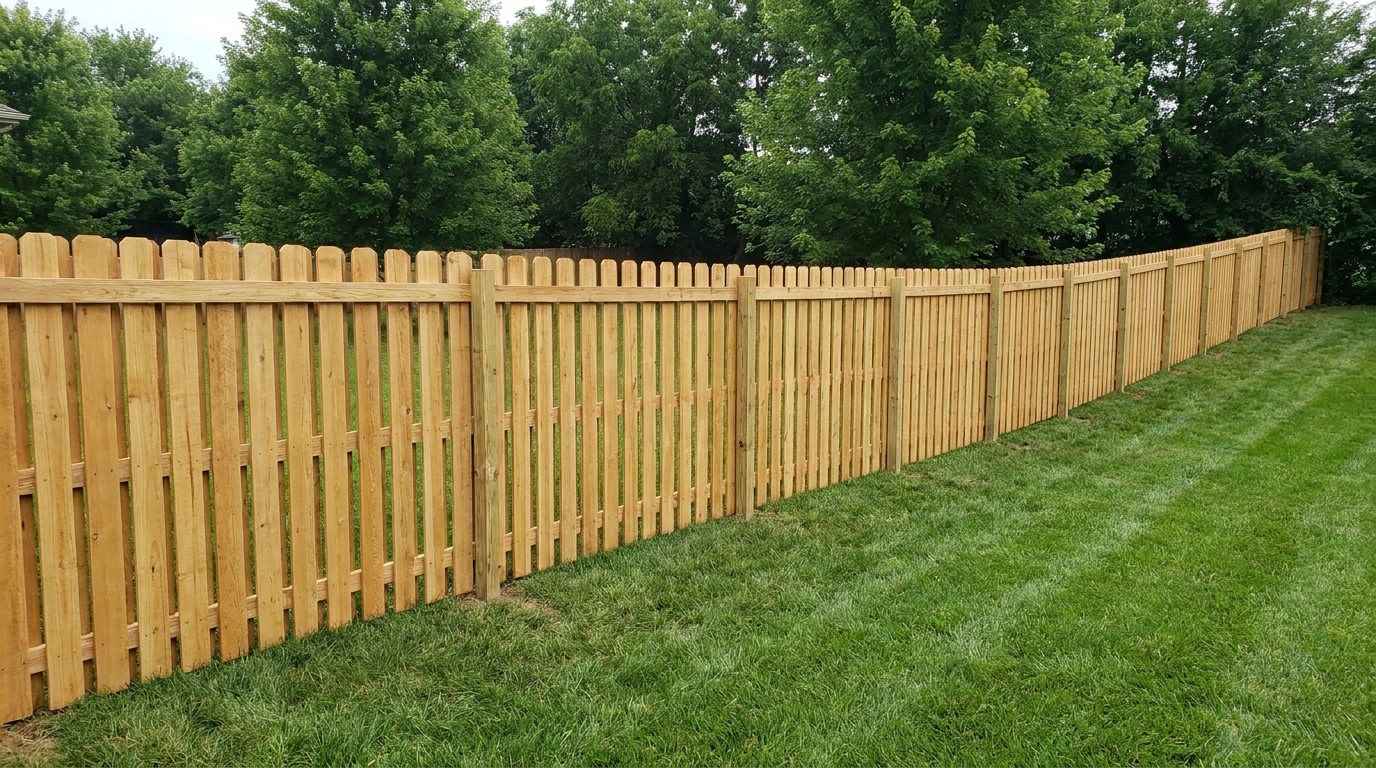
Privacy, picket and rail fence, laid out along a line you've confirmed and set to a consistent height across changing grade.
-
Post setting and replacement
Holes dug below frost depth and posts set properly. Replacing a failed post is often all a sagging section needs.
-
Panel, picket and rail repair
Individual boards, rails and sections replaced and matched as closely as weathered lumber allows.
-
Gate rebuild and adjustment
Sagging gates re-squared or rebuilt, hardware replaced, and latches set so they close without lifting.
-
Line and grade layout
String lines and consistent post spacing, with the run stepped or racked to follow sloping ground cleanly.
-
Old fence removal and haul-off
Existing fence, posts, concrete footings and debris removed and hauled off.
Fences fail from the ground up
A leaning fence almost never has a panel problem. It has a post problem, and the post problem started underground years before anything looked wrong.
Frost depth is the number that matters
When the ground freezes it expands, and it can lift a post that isn't set deep enough. Do that over a few winters and the post works its way loose — that's frost heave, and it's the main reason fences in this region start to lean. Setting posts below the frost line puts the base into ground that doesn't cycle, so there's nothing to lift.
How a post is set matters as much as how deep
Concrete poured in a way that traps water around the base of a wood post rots it from underneath, in the dark, where nobody looks until the fence moves. Proper setting either sheds water away from the post or drains it out at the bottom. It's a detail nobody sees and it decides how many winters the fence gets.
Sloping ground: step it or rack it
On a grade you either step the panels down like stairs, which leaves triangular gaps at the bottom, or rack them so the pickets stay vertical while the rails follow the slope. Which one looks right depends on the fence style and how steep your yard is. It's worth deciding deliberately rather than discovering it after installation.
Gates sag because they're the only moving part
A gate carries its whole weight on one side and swings, so it works itself out of square in a way fixed panels don't. Bracing, hardware and the post it hangs from all matter. Most sagging gates can be re-squared rather than replaced.
Know where your property line is
Fence disputes with neighbors are miserable and expensive, and we can't resolve them for you. Confirming the line — and any HOA or municipal requirements — is the property owner's responsibility before we set the first post. If you're unsure, a survey costs a great deal less than moving a fence.
Private lines don't get marked by 811
We call Missouri One Call for public utility locates. Irrigation lines, invisible pet fencing and low-voltage lighting are privately installed and 811 won't find them. On a job that digs a hole every eight feet, that's worth marking.
Included in fence work
- On-site measurement and layout
- Utility locate request before digging
- Post holes dug below frost depth
- Posts set, plumbed and lined
- Panel, rail and picket installation
- Gate hanging, bracing and hardware
- Old fence removal and haul-off
- Site cleanup and spoil removal
Not included
- Property line surveys
- HOA and municipal permit applications
- Chain link, vinyl and ornamental iron installation
- Automatic gate openers and electrical
How a fence job runs
-
Tell us what you need
New run, replacement, or a section that's started to lean. Photos by text help a lot on repairs.
-
Jeremy measures and checks
Footage, grade, gate placement and post condition on repairs. He'll tell you if a repair beats a replacement.
-
Written quote
Footage, materials, gate count and price. Line confirmation and approvals are on you — we'll flag what's needed.
-
Locate, set, build
Utility locates called, holes dug to depth, posts set and lined, panels hung and the site cleaned up.
Leaning to straight
An Oak Grove back line: failed posts replaced and the run re-set and re-lined.
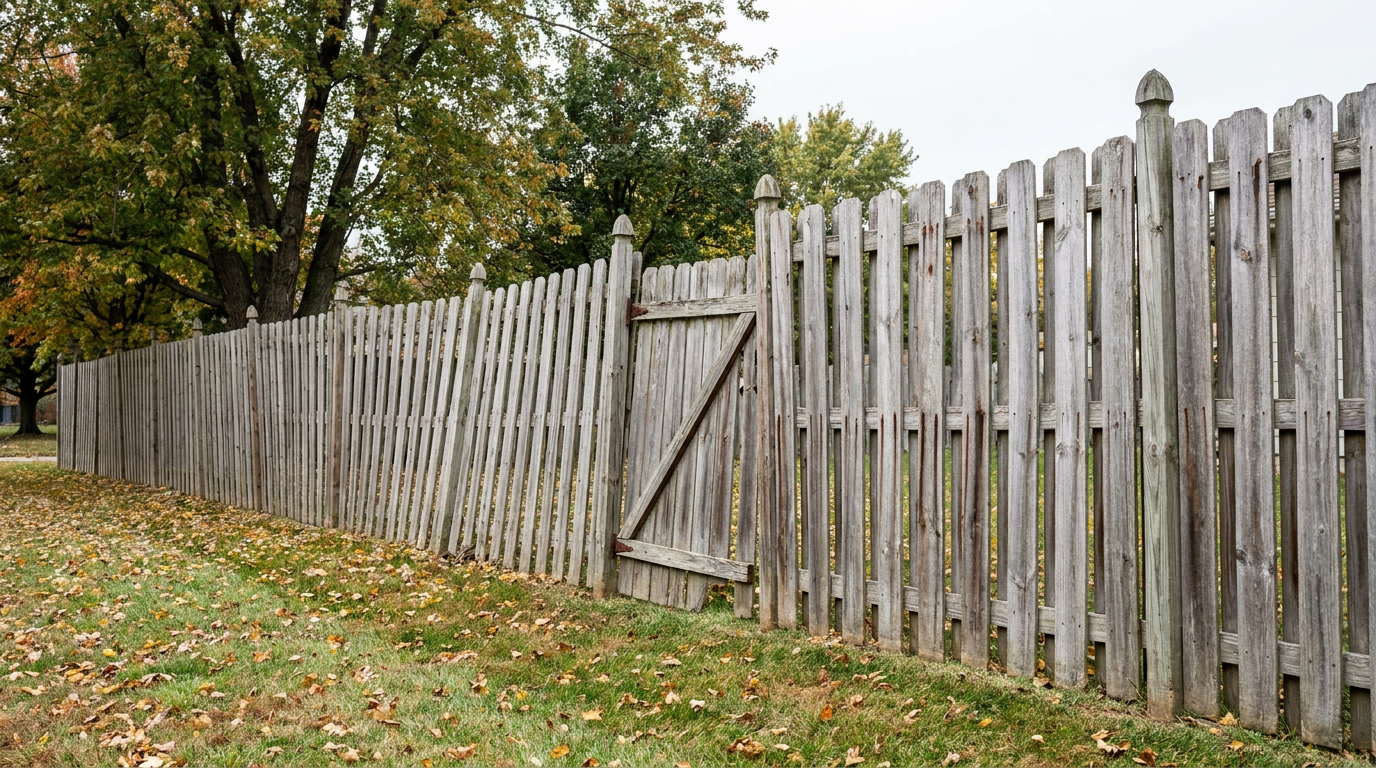
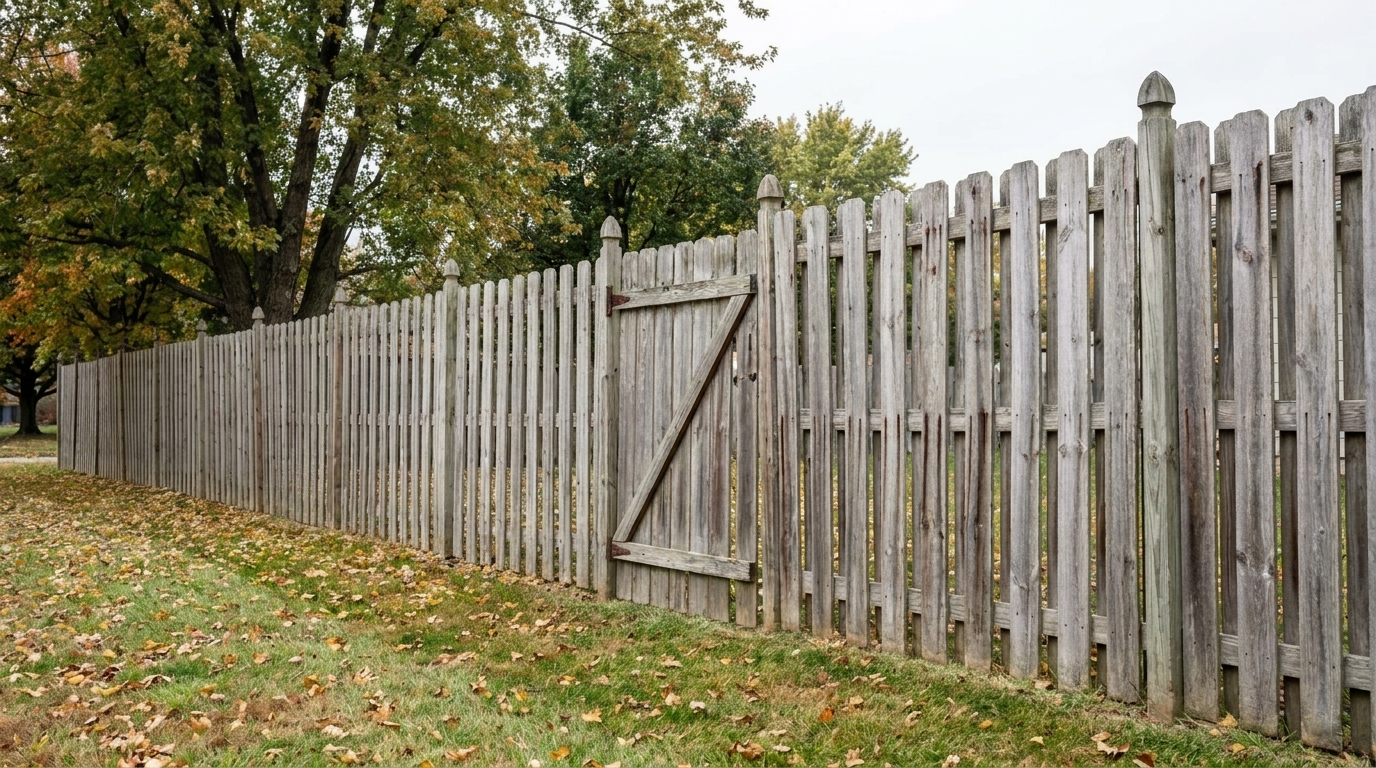
Drag the handle, or focus it and use the left and right arrow keys.
Fence questions
What pairs with fence work
Fence starting to lean?
Send a photo or have Jeremy come look. You'll get a straight answer on repair versus replacement.