
We fix what's under the boards too
New builds, board replacement, railing and stair work, sanding and sealing across the KC metro. Soft spots usually mean a framing problem, and covering it with new decking just hides it for a season.
- Build & repair
- Licensed & insured
- Mon–Sat, 6AM–6PM
- Free estimates
What we handle
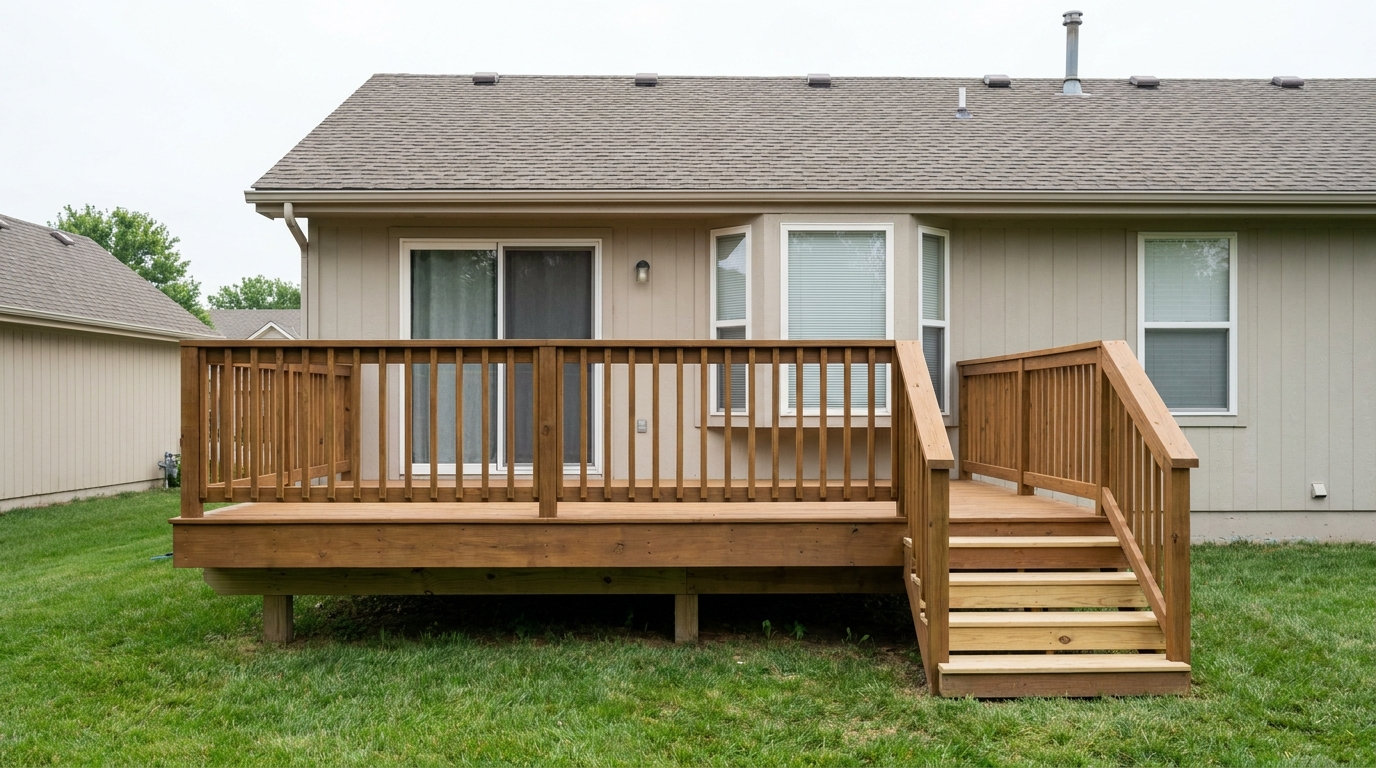
From a full build down to replacing the four boards by the grill that everyone steps around.
-
New deck construction
Footings, framing, decking and railing, built to the layout the yard and the door height actually allow for.
-
Board replacement
Individual boards or a full re-deck over sound framing. Matched, spaced and fastened so the new work doesn't announce itself.
-
Framing and structural repair
Joists, beams, ledger and post repair. This is the part that matters and the part most quotes skip.
-
Railing and stair work
Rebuilt or replaced railing, posts, balusters, stringers and treads — the parts people actually put weight on.
-
Sanding, staining and sealing
Cleaned, sanded where it needs it, and sealed. Done at the right time of year so the finish actually cures.
-
Cleanup and haul-off
Old material, fasteners and offcuts leave with us. Nothing left in a pile beside the garage.
The board is rarely the actual problem
When someone calls about a deck, they're usually describing a symptom. The useful part of the visit is finding what's causing it.
A soft board means water got in somewhere
Decking that flexes underfoot has usually been staying wet, and if the board is wet the joist beneath it has been wet too. Screwing a new board over a rotting joist buys you a season. We pull the board, look at what's under it, and tell you what we find — even when that's a bigger conversation than you wanted.
The ledger is the part that hurts people
The ledger board is what attaches the deck to your house, and improper ledger attachment or flashing is the most common cause of serious deck failure. It's also invisible from the surface. On any repair of size we look at how the deck is tied to the structure and whether water has been running behind it.
Posts rot from the bottom, in the dark
Posts set directly in soil or in concrete that traps water rot at grade where you can't see it. A post that looks fine at eye level can be gone at the base. It's worth checking before you spend money on new decking above it.
Repair or replace, honestly
Sometimes the framing is sound and the deck just needs boards and a finish, and that's a fraction of the cost of a rebuild. Sometimes enough of the structure is compromised that repairs stop making financial sense. We'll tell you which one you're looking at, including when the answer is the cheaper one.
Timing the finish matters
Stain and sealer applied to damp wood, in the wrong temperature, or onto a deck that hasn't weathered enough won't bond and will peel within a year. New pressure-treated lumber in particular needs to dry before it takes a finish. We'd rather schedule it right than do it twice.
Included in deck work
- On-site inspection of decking and framing
- Board replacement or full re-deck
- Joist, beam and post repair
- Ledger inspection on structural work
- Railing, stair and baluster work
- Sanding, staining and sealing
- Old material haul-off and cleanup
Not included
- Roofed structures, pergolas and screened enclosures
- Electrical and gas line work
- Hot tub structural engineering
- Building permit applications
How a deck job runs
-
Tell us what you're seeing
Soft spots, a wobbly rail, boards you step around. A photo by text usually tells us a lot before we arrive.
-
Jeremy inspects it properly
Surface and structure both — joists, posts, ledger and fasteners, not just what you can see standing on it.
-
Repair or rebuild, in writing
You get the honest read and a written price. If we find more once boards come off, you hear about it before we continue.
-
Build, finish, clean up
Work done on the scheduled days, old material hauled off, and the finish timed so it actually cures.
Weathered to rebuilt
A Grandview back deck: failing boards replaced, railing rebuilt, sanded and sealed.
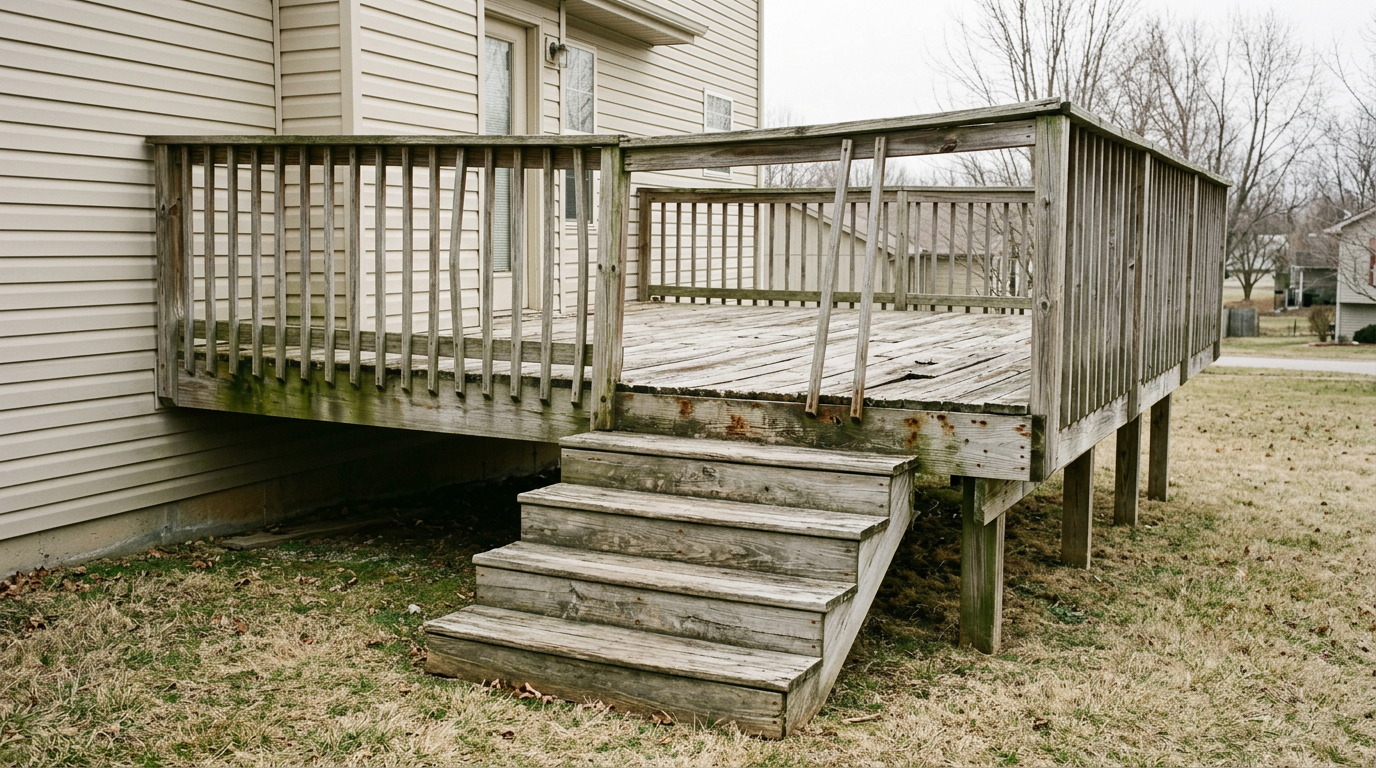
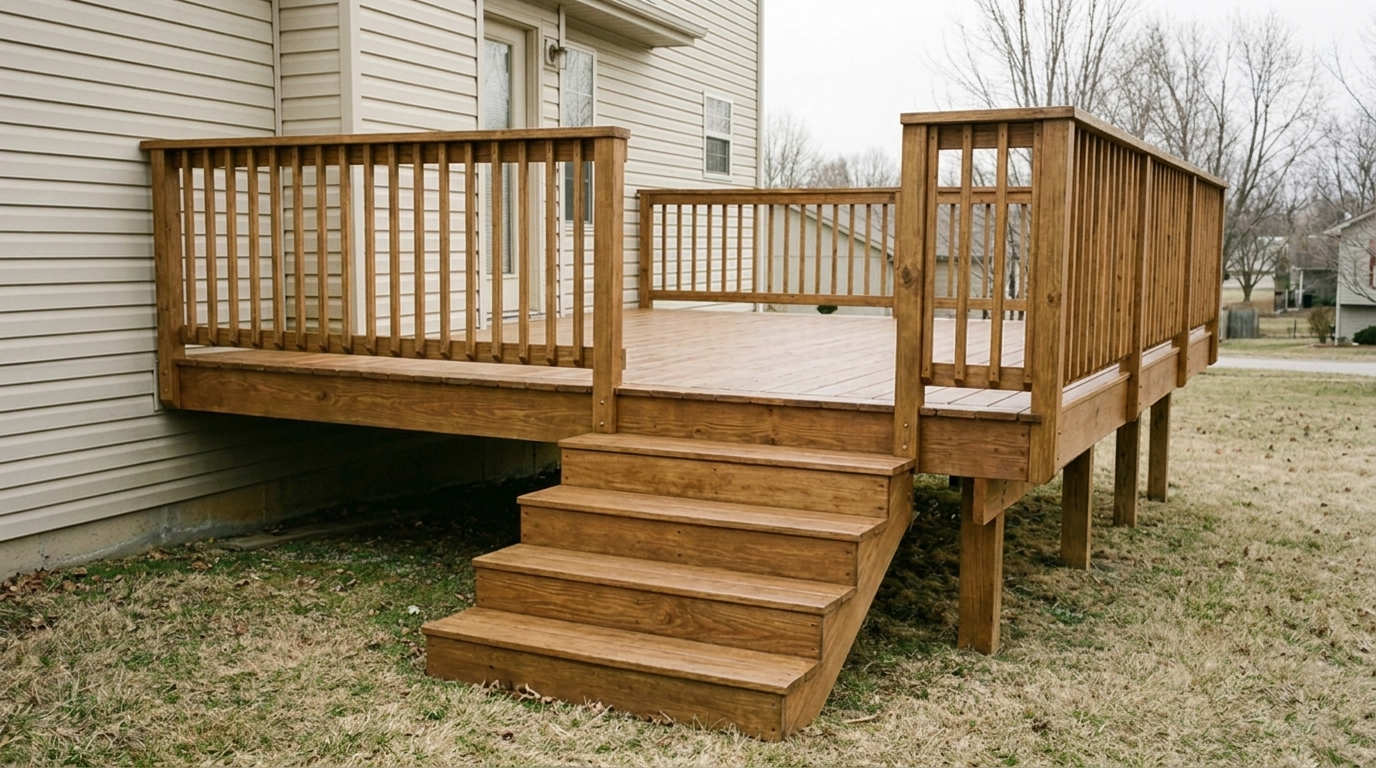
Drag the handle, or focus it and use the left and right arrow keys.
Deck questions
What pairs with deck work
Got a board you step around?
Text us a photo or have Jeremy come look at it. You'll get a straight answer on repair versus rebuild.