
Pruned to the plant, not to the trimmer
Seasonal pruning, shaping, thinning and deadwood removal across Blue Springs and the KC metro. Cuts made where the plant can actually heal them — which is most of the difference between pruning and just shortening.
- Seasonal pruning
- Licensed & insured
- Mon–Sat, 6AM–6PM
- Free estimates
What tree and shrub care covers
Ornamental trees, shrubs and hedges on the property. Anything requiring climbing or removal above roof height goes to a certified arborist.
-
Seasonal pruning and shaping
Cut at the right time for each species, to the plant's natural form rather than into a shape it will fight all season.
-
Thinning and deadwood removal
Opening the interior so light and air reach the middle of the plant, and taking out dead, damaged and crossing branches.
-
Ornamental and small tree pruning
Structure, clearance and shaping on ornamentals within safe reach from the ground.
-
Hedge and screen maintenance
Kept dense and even, with the base left wider than the top so the bottom doesn't go bare from shading.
-
Bed refresh around plantings
Edges recut, mulch topped up at the right depth, and pulled back off trunks where someone previously piled it.
-
Cleanup and haul-off
Clippings and brush leave with us. Nothing bagged and stacked at the curb for you to deal with.
Why so many shrubs look worse after they're trimmed
Shearing a shrub into a box is fast, and it's why so many foundation plantings end up as dense green shells with nothing but bare sticks inside.
Shearing forces growth to the outside
Every cut on a stem triggers new shoots just behind it. Shear the whole outer surface and you get a solid layer of new growth on the outside, which shades out the interior until the middle of the plant dies back. A few years of that and there's no live wood left inside to cut back to. Selective cuts — removing whole stems at their origin — keep light reaching the interior so the plant stays full all the way through.
Timing depends on when the plant sets its buds
Spring-flowering shrubs like lilac and forsythia form next year's buds shortly after they bloom. Prune them in fall or winter and you cut off the flowers you were waiting for. Summer bloomers set buds on new growth and can be cut back while dormant. Getting this wrong doesn't kill anything — it just costs you a season of flowers, which is why people rarely connect the two.
Hedges should be wider at the bottom
A hedge trimmed straight up and down, or narrower at the base, shades its own lower branches until they thin out and go bare. Leaving the base slightly wider than the top lets light reach the bottom and keeps the screen solid from the ground up. It's a small angle that decides whether a privacy hedge stays private.
Where the cut lands matters
Cuts made too far from a bud leave a stub that dies back and invites decay. Cuts flush against the trunk remove the collar of tissue the plant uses to seal the wound. Neither is visible from across the yard, and both show up two years later as dieback and rot.
What we hand off
Anything needing climbing, rigging or work above roof height belongs to a certified arborist with the right insurance for it. Large removals, storm damage and anything near power lines are the same. We'll tell you plainly when a job is past what we do, rather than take it on and hope.
Included in tree & shrub care
- Seasonal pruning timed to species
- Selective thinning and deadwood removal
- Hedge and screen shaping
- Ornamental tree pruning within ground reach
- Clearance cuts off walks, drives and structures
- Bed edge recut and mulch refresh
- Brush and clipping haul-off
Not included
- Climbing, rigging and aerial work
- Tree removal and stump grinding
- Work near or around power lines
- Disease diagnosis and chemical treatment
How a pruning visit works
-
Tell us what's overgrown
Which plants, and what's bothering you — blocking a window, crowding a walk, or just looking rough.
-
Jeremy walks the plantings
He identifies what's there, checks for dead and damaged wood, and flags anything that should wait for a better season.
-
A written scope
What gets pruned now, what's better left until after it flowers, and the price. One-time or recurring, your call.
-
Prune, refresh, clean up
Cuts made properly, beds tidied, brush hauled off and hard surfaces blown clean.
Overgrown to shaped
A Lee's Summit foundation planting: sheared shells thinned back to their natural form.
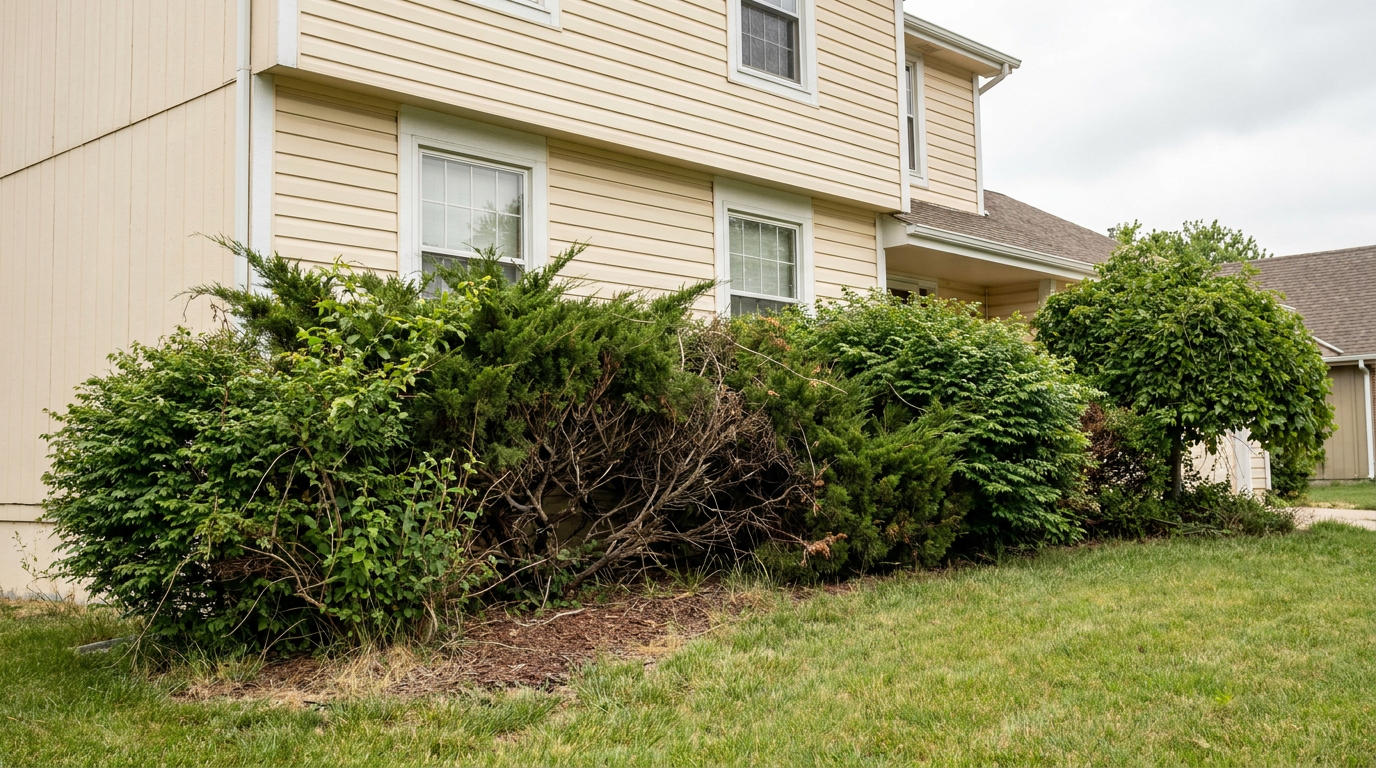
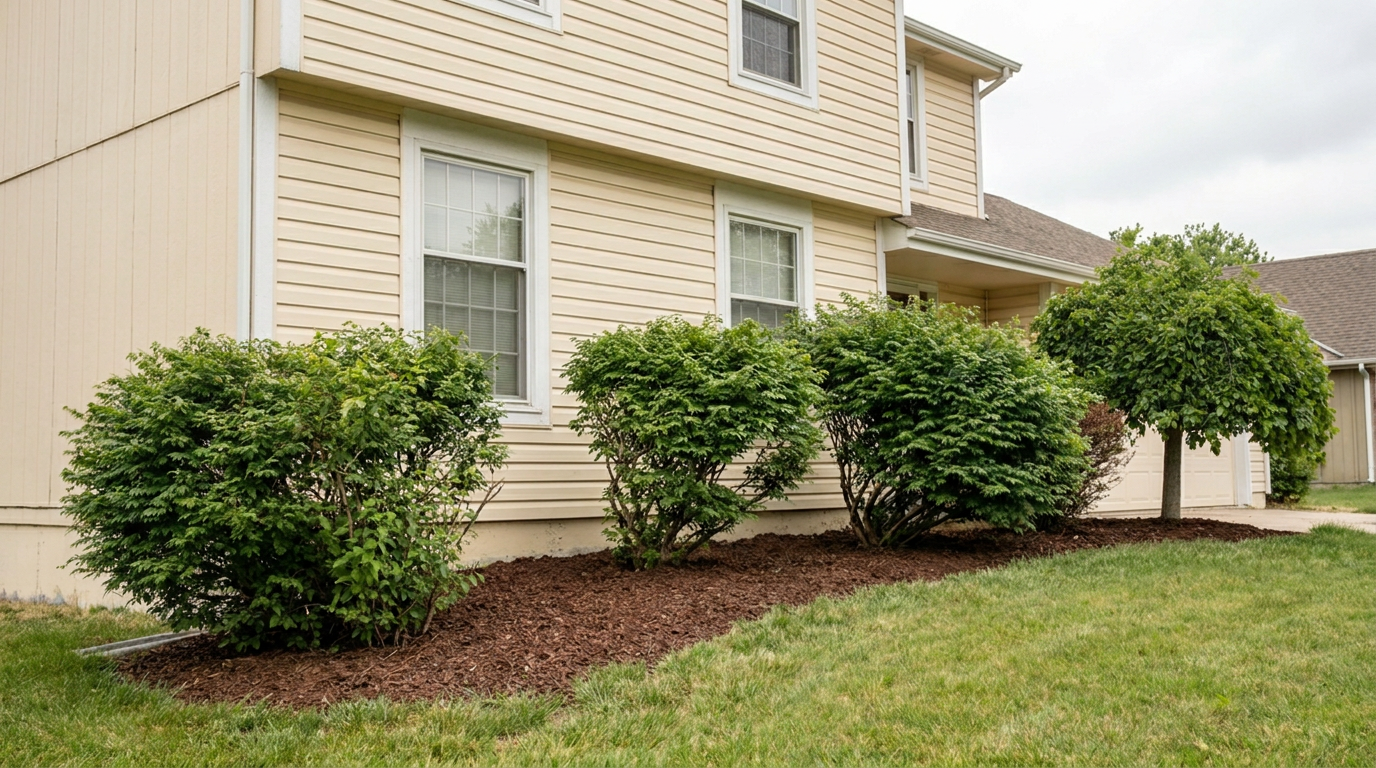
Drag the handle, or focus it and use the left and right arrow keys.
Tree & shrub questions
What pairs with tree & shrub care
Something blocking a window?
Jeremy will look at what you've got and tell you what should be cut now versus what's worth waiting on.