
Find where it's going before you move it
French drains, drain tile, downspout burial, dry creek beds and regrading across the KC metro. The fix for a yard that holds water, a low spot that never dries, and a basement that shouldn't be damp.
- Diagnosis first
- Licensed & insured
- 30 mi around Blue Springs
- Free estimates
How we move water off a property
Which of these you need depends entirely on where the water is coming from. That's what the walkthrough is for.
-
French drains and drain tile
Perforated pipe in a gravel trench, wrapped in fabric, pitched to daylight. Intercepts subsurface water before it reaches the spot that's staying wet.
-
Downspout burial and extension
Roof water carried well away from the foundation instead of dumping at the corner and soaking back down beside your basement wall.
-
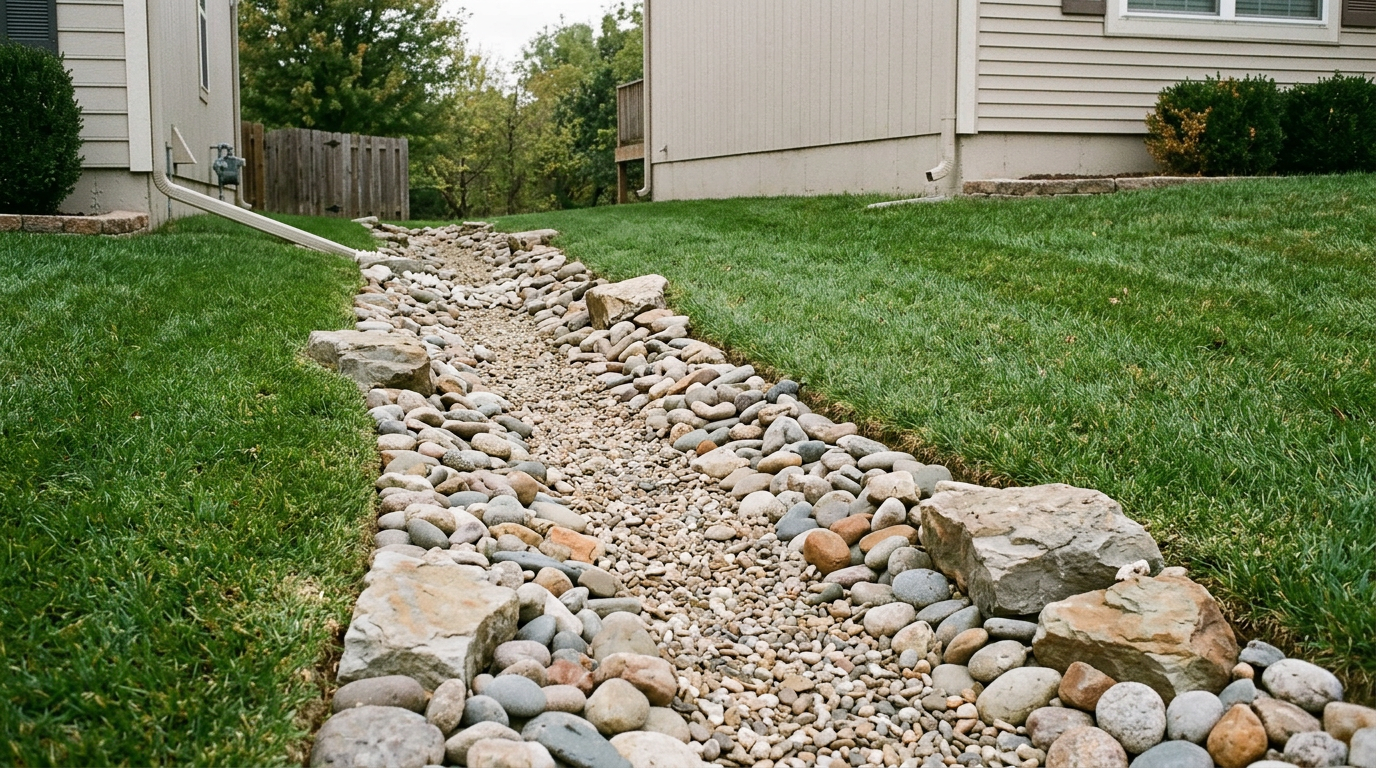
Dry creek beds
A stone channel that handles heavy runoff and looks like a design feature rather than a drainage repair.
-
Regrading and low-spot correction
Reshaping the ground so water runs where you want it. Often the cheapest real fix, and the one most often skipped.
-
Swales and surface routing
Shallow graded channels that move sheet flow across a property without pipe, where the grade allows it.
-
Restoration and cleanup
Trenches backfilled and compacted, sod or seed restored, spoil hauled off. The yard gets put back, not just dug up.
Most drainage jobs fail because nobody found the source
Standing water is a symptom. Installing a drain where the puddle is, without working out why water arrives there, is how people end up paying twice.
Surface water and groundwater are different problems
Water sheeting across the lawn after a storm needs grading or a swale. Water moving underground through the soil profile needs an intercepting drain at depth. They look identical once they've pooled in the same low spot, and the wrong fix does nothing. Standing in a yard during or just after rain tells you more than any amount of guessing on a dry day.
It's usually the roof
A surprising share of soggy yards and damp basements trace back to downspouts discharging a few feet from the foundation. A roof sheds a lot of water in a storm, and dropping all of it at the corner of the house saturates the soil right where you least want it. Carrying that water twenty or thirty feet out is often cheaper than any drain and solves more.
Every drain needs somewhere to go
Pipe has to run downhill to an outlet — daylight at a lower grade, a swale, a street or an approved discharge point. On flat lots that's the hard constraint, and it's the first thing Jeremy checks. Anyone who quotes a drain without establishing where it terminates is selling you a trench, not a solution.
Grade beats pipe when grade is possible
If a low spot can be filled and shaped so water leaves on its own, that's usually less money and less to fail later. Pipe silts up over decades; dirt doesn't. We'd rather regrade where regrading works and save the pipe for where it's genuinely needed.
What we won't tell you
We're landscapers, not foundation contractors. We can move water away from your house, and that solves plenty of damp-basement problems. If your issue is a cracked wall, a failed interior drain or a structural problem, we'll say so and tell you to call someone who does that work.
Included in drainage work
- On-site diagnosis of water source and path
- Outlet and discharge point assessment
- Utility locate request before digging
- Trenching, pipe, gravel and filter fabric
- Downspout tie-in and burial
- Backfill, compaction and grade restoration
- Sod or seed repair over the work
- Spoil and debris haul-off
Not included
- Foundation repair and waterproofing
- Interior basement drainage systems
- Sump pump installation
- Municipal storm sewer connections
How a drainage job runs
-
Describe what you're seeing
Where it pools, how long it stays, and whether it's tied to storms or constant. Photos during a rain are genuinely useful.
-
Jeremy finds the source
Grade, roof discharge, soil and neighboring properties. He works out where the water starts and where it can legally end up.
-
A plan with an outlet, in writing
Scope, method and price — including where the water discharges. If a cheaper regrade solves it, that's what you'll be quoted.
-
Dig, install, restore
Utility locates called, trench cut, pipe set and pitched, then backfilled, compacted and the lawn put back.
Standing water to dry ground
An Independence side yard: chronic low spot regraded and tied into a French drain.
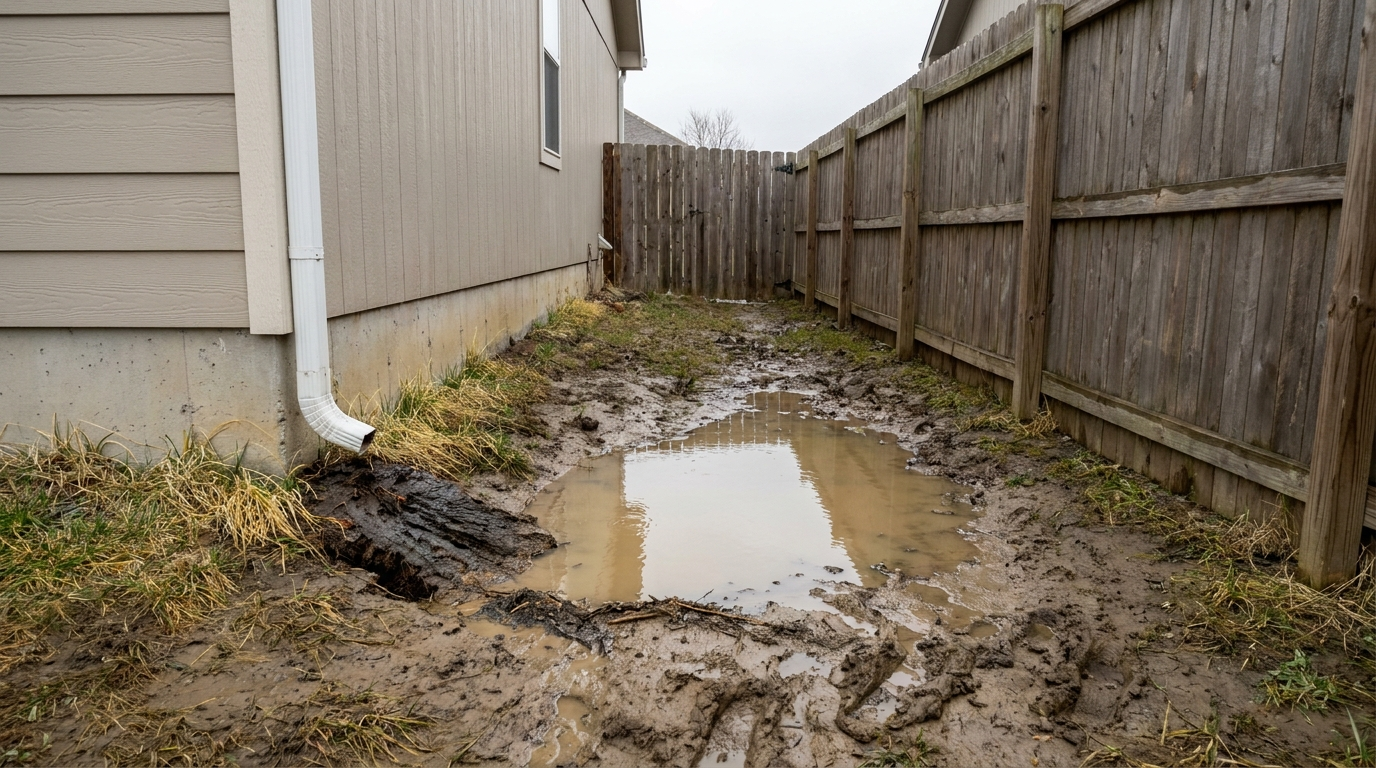
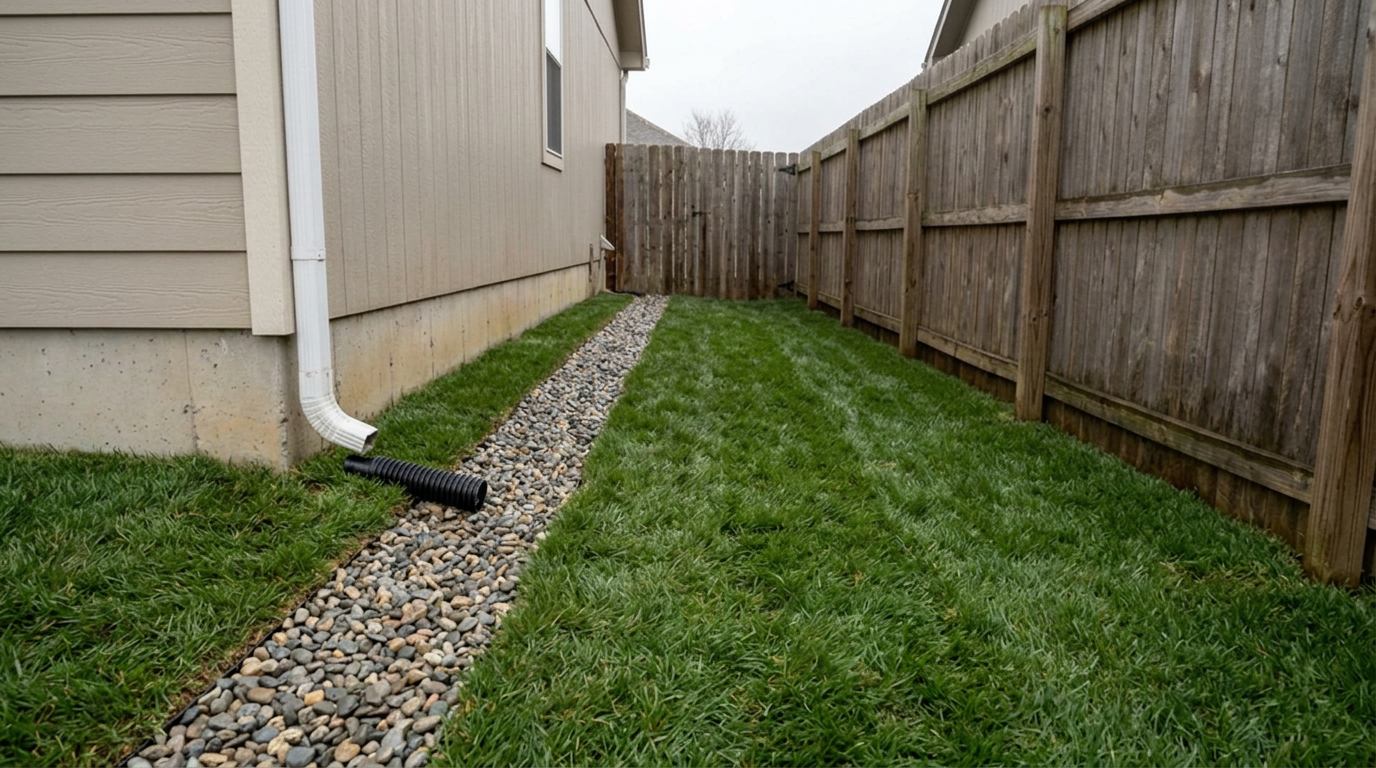
Drag the handle, or focus it and use the left and right arrow keys.
Drainage questions
What pairs with drainage
Got a spot that never dries out?
Jeremy will work out where the water is coming from before quoting anything. Free, and you'll get an honest read on what it takes.